I built it. Users loved it. I shut it down anyway.
- My role
- Solo — design, build, ship, and the decision to stop
- The problem
- Research synthesis is slow, and the obvious fix is to automate the thinking rather than the gathering
- What I did
- Built a multi-agent research platform with Stripe billing, onboarding and usage limits — a real SaaS, not a script
- Outcome
- Shipped in 6 weeks. Users skipped the thinking entirely, so I shut it down
Focus Agents was a multi-agent platform that turned a researcher's 26-hour synthesis job into 33 minutes. Solo built. Production-ready in six weeks. Six PMs and product designers on a free Pro tier in closed beta. By every standard metric, it was working. So why did I stop? Because I watched what they were actually doing with it. And I couldn't unsee it.
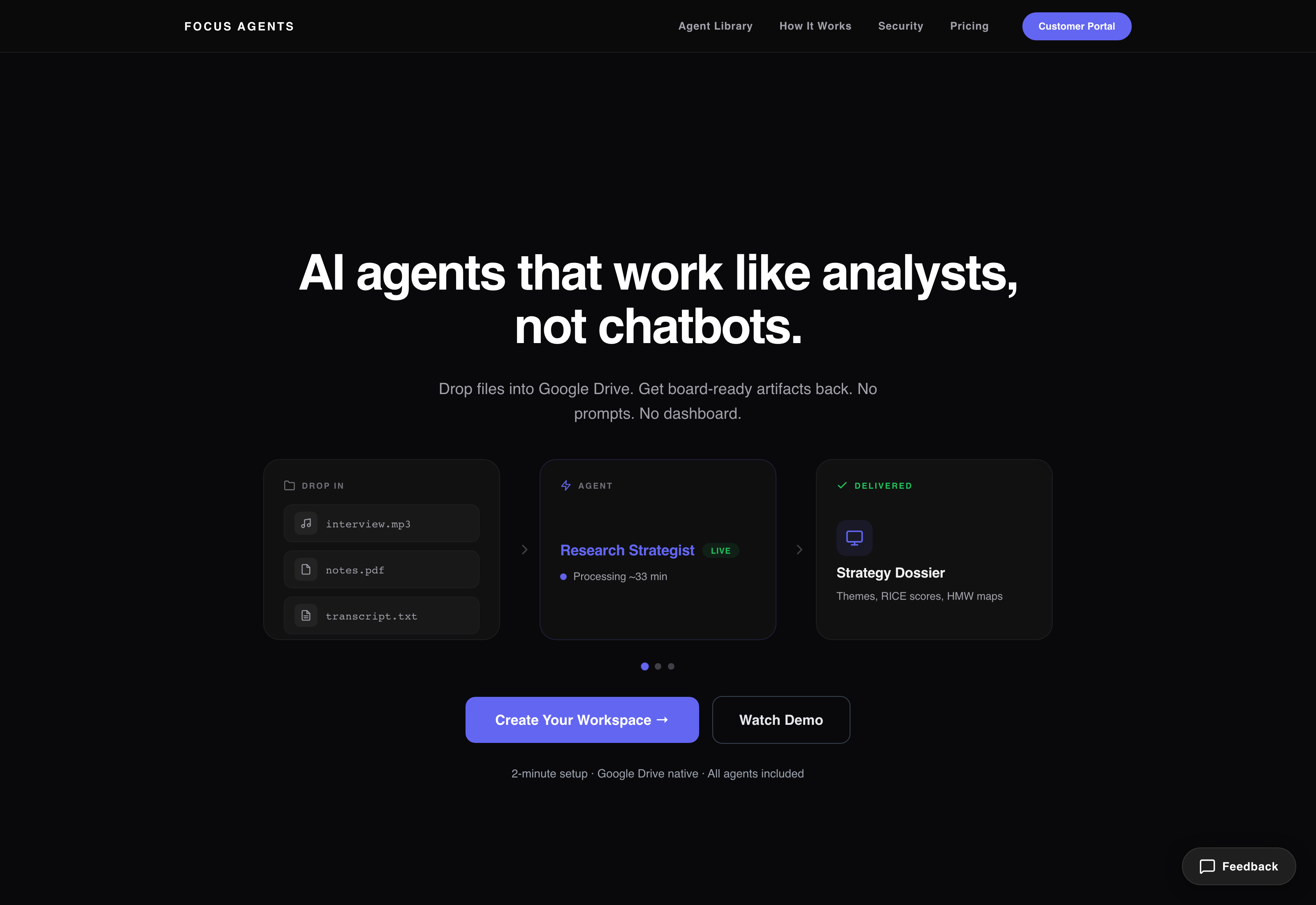
What it actually did
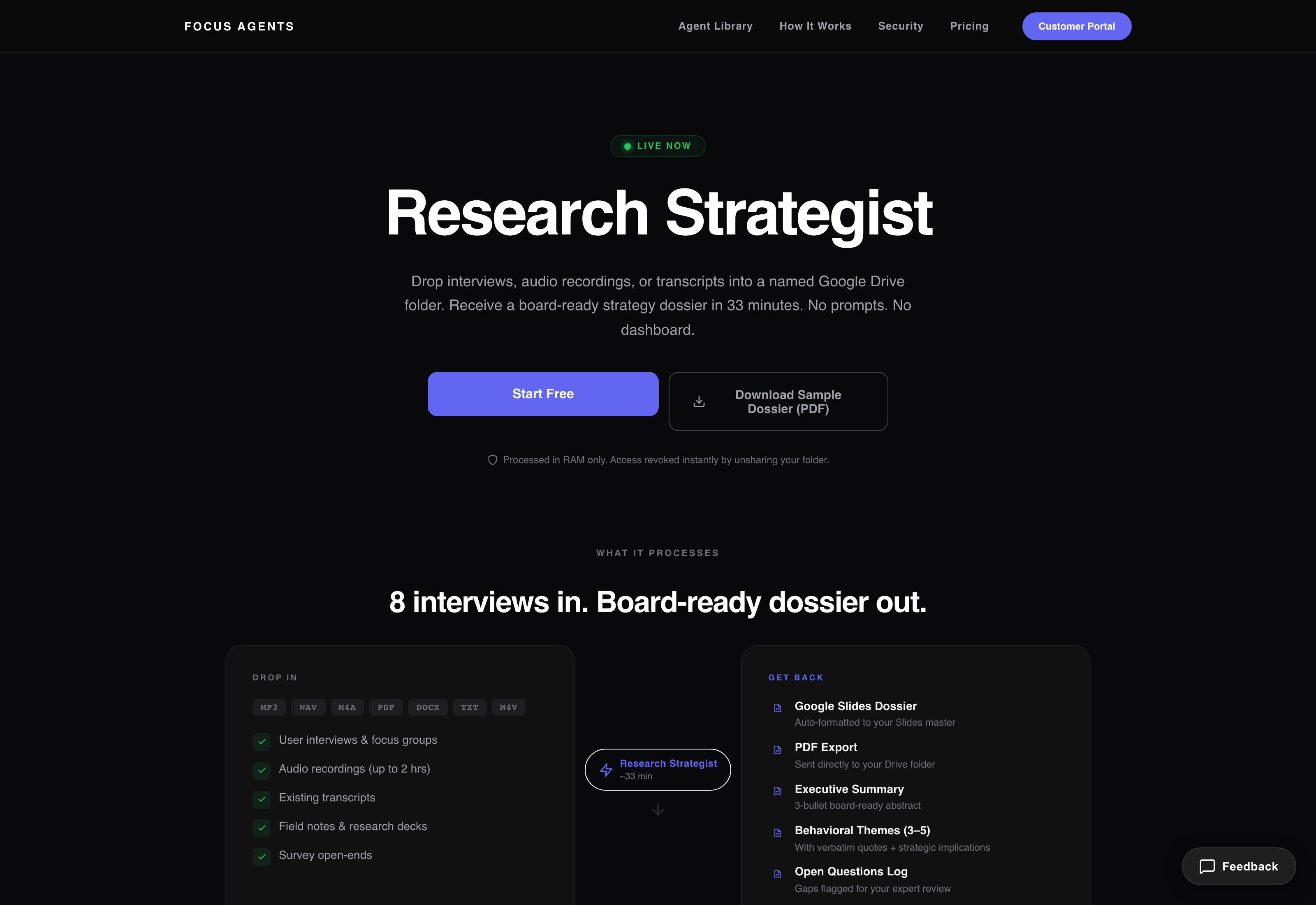
Three agents, all running production. The Research Strategist took interview transcripts and audio and turned them into a four-artifact strategy package — a Google Slides dossier, an executive summary, a quote library, a how-might-we doc. The Survey Analyzer ate CSVs from Typeform, Qualtrics, or Google Forms and produced a findings deck with PII automatically stripped. The Knowledge Distiller converted PDFs and slides into high-fidelity markdown for AI knowledge vaults. All three scored 4.2–4.5 out of 5 on a 12-dimension quality rubric I ran on every job.
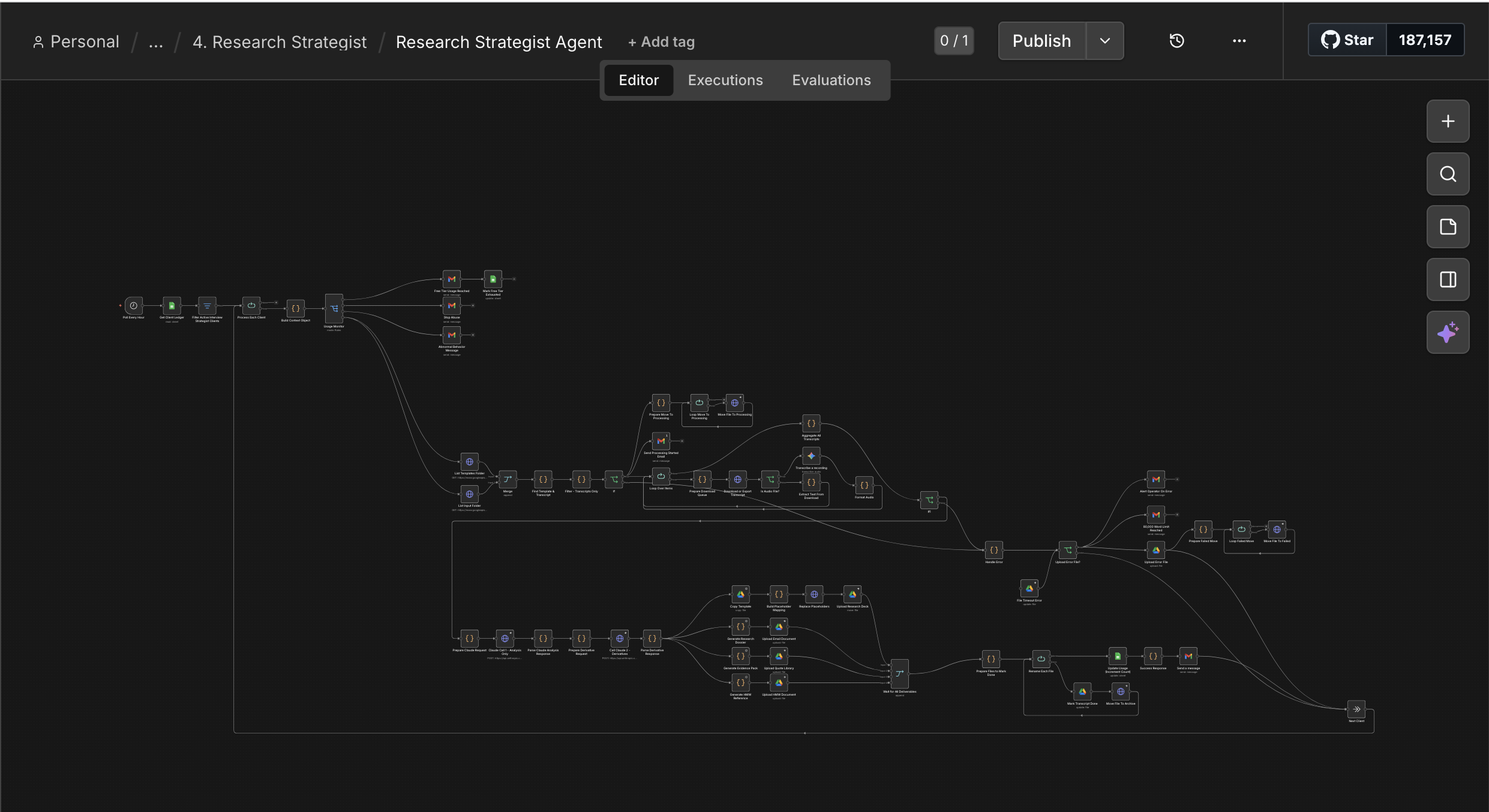
What it looked like under the hood
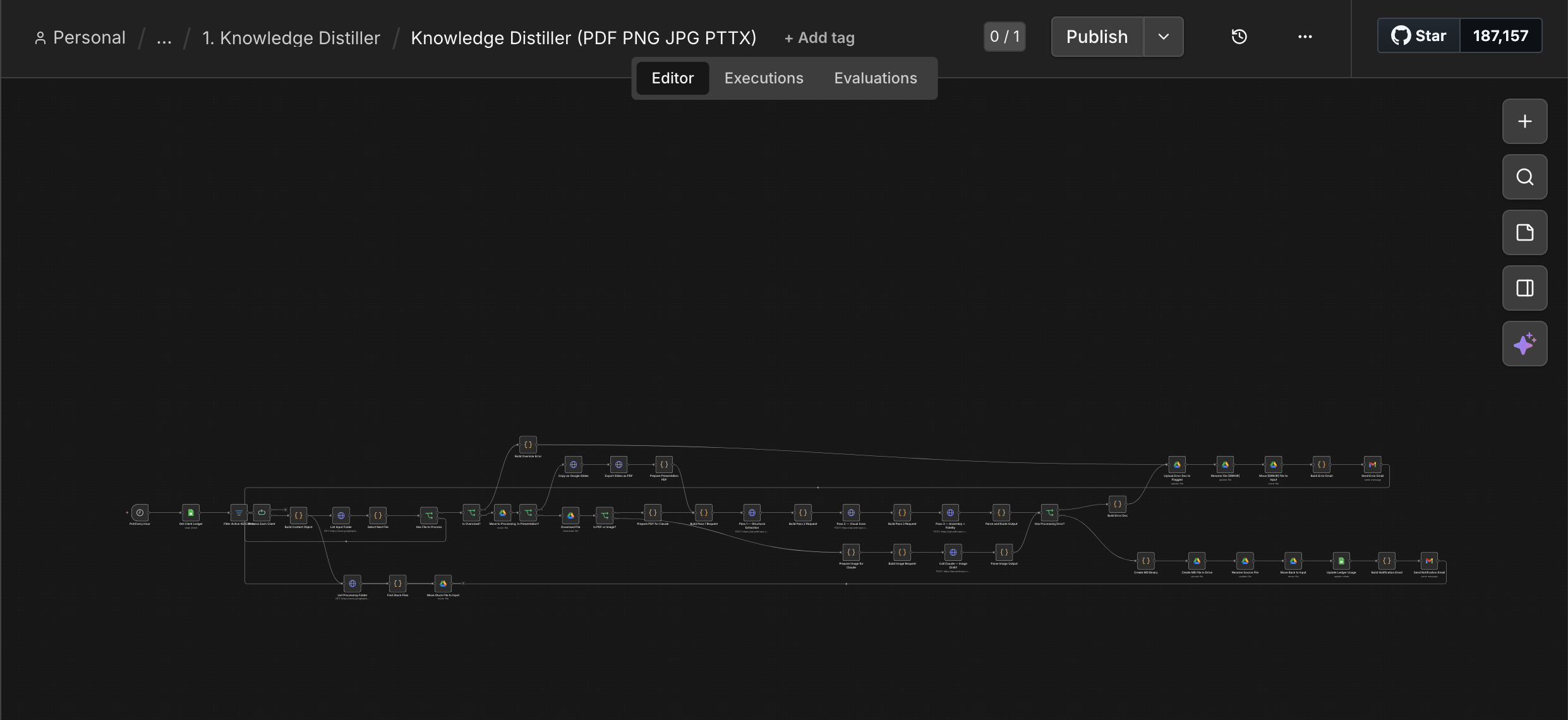
Each of those three agents is actually a multi-step pipeline. Below are the live n8n workflows — every node is a step (parse, classify, route, call Claude, structure the output, write to Drive). The squiggly mess is the point: this isn't one prompt, it's a chain of dozens of decisions that turn raw input into something you'd actually hand to a board.
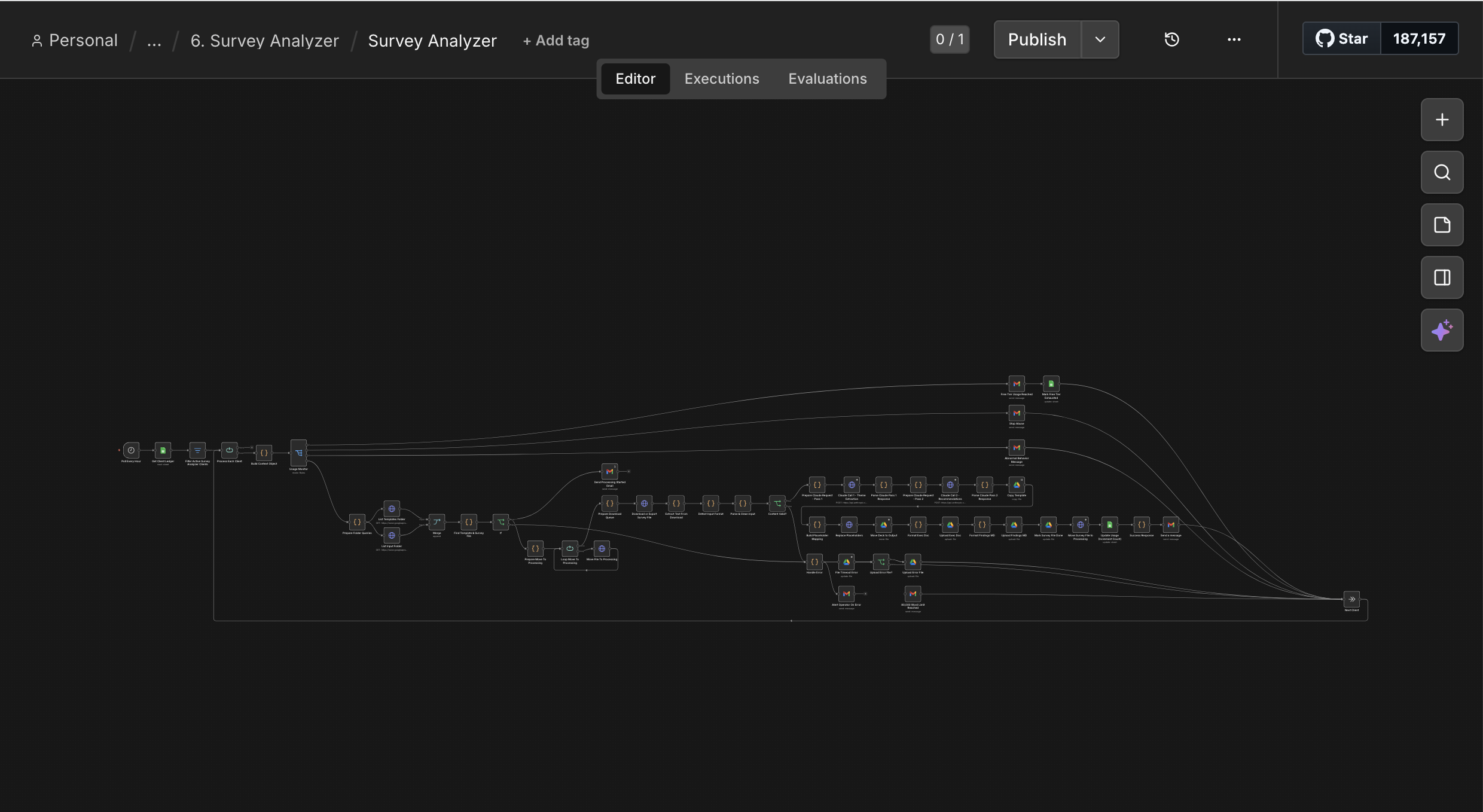
And the platform around it
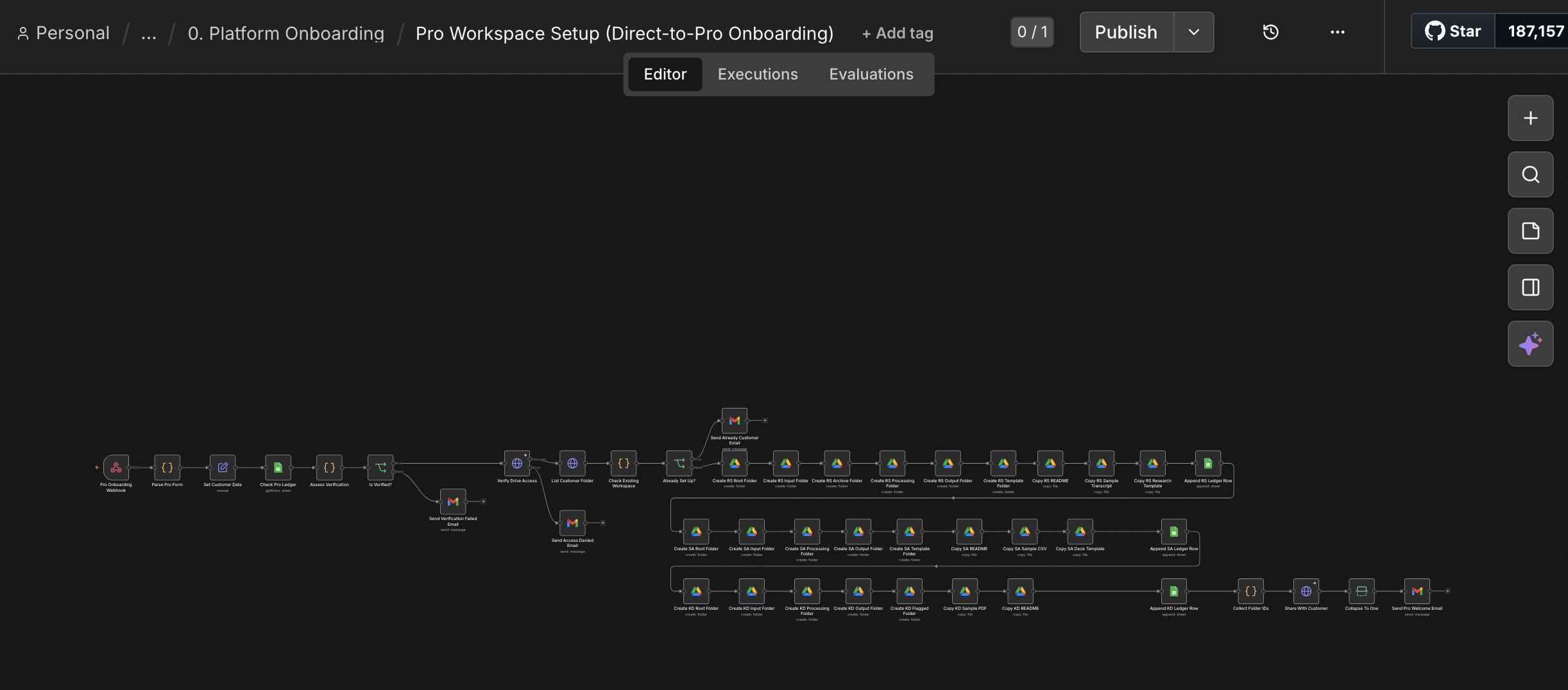
Three agents alone don't make a product — you also need onboarding, billing, usage limits, and the boring stuff that turns a script into a SaaS. I built that too. Stripe-integrated Pro onboarding, Tally-driven free-tier flow, and a 4-branch usage monitor that decided whether each new job was OK to run, abuse, an anomaly, or hitting a free limit.
What I learned in the beta
The platform worked. The agents worked. The users — exactly my target ICP — also worked, sort of. They used it to skip the thinking entirely. They didn't engage with the data. They didn't read the dossiers. They forwarded them. The faster I made the synthesis, the less anyone did the synthesis.
I'd written an Empathy & Ethics framework before launch — an architecture-level constraint that said, in essence, this product should augment researchers, not replace the work that makes them researchers. I'd built guardrails into the prompts. Human-in-the-loop. Output traceability. The whole architecture was designed to make empathetic use the default. None of it survived contact with the economics. Once "save 26 hours" was on the table, "engage with what your users said" was always going to lose.
"I had users, and what I observed made me unwilling to scale the pattern." — Why I stopped, in one sentence
The faster I made the synthesis, the less anyone did the synthesis.
What this story is about
I'm including this case study because it tells you three things at once. One: I can solo-ship a production multi-agent platform in six weeks — full Stripe billing, stateless scaling, the works. Two: I notice ethical problems before the press release, not after. Three: when principle and revenue conflict, I pick principle. That third one is rare in AI right now. It's the exact thing AI-native companies say they want in leadership. Some of them actually mean it.